UX doesn't mean "not aesthetically pleasing". You can have a beautiful website and still have a conversion rate that's in the trash. Your app can be slick and modern and still have users drop off before they ever reach its purpose. Of course, great visuals matter, but without UX strategy, they're just decoration.
UX strategy is the work that happens before the design. It's the planning, the research, the intentional mapping of how a user moves through your digital product, and why. For startups, it's not optional (or it shouldn't be). Solid planning is the difference between launching something that works and launching something that looks good in a mockup but falls apart in a real use case scenario.
This leads to frustrated users who ditch and may never return because you've already burned that bridge.
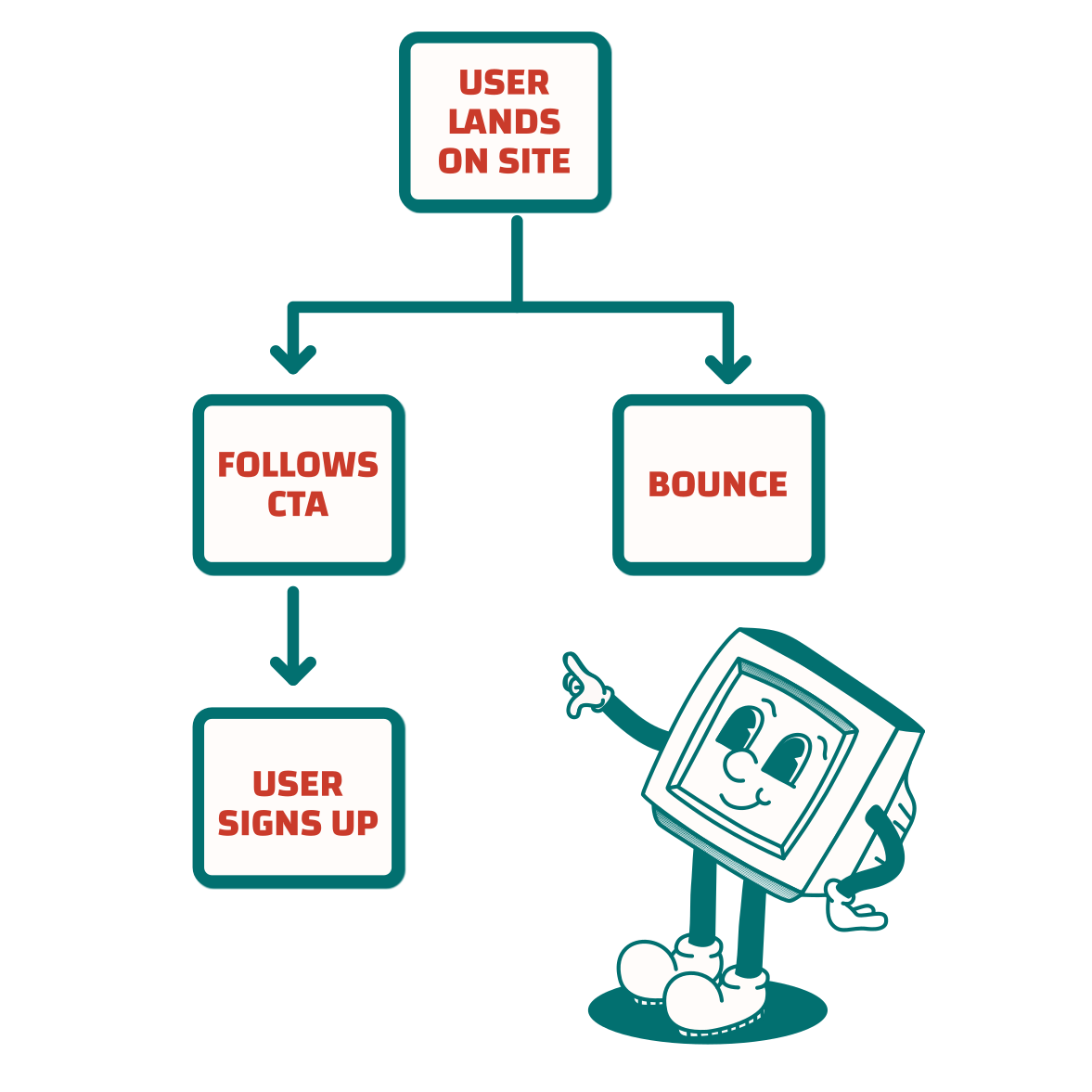
UX stands for user experience. More descriptively, it's every interaction a person has with your product. From the moment they land on your site or open your app, to the moment they convert or bounce. It can determine how fast they can find what they need, how intuitive the flow feels, and how much friction stands between them and the action you want them to take.
Just like good design doesn't stand out, good UX is invisible. When it's done right, users don't notice it. They just accomplish their goal quickly and seamlessly. Bad UX, however, is painfully visible. Users feel confused, frustrated, or lost — and that causes those users to run away and never return.
The term "UX" has unfortunately become a buzzword that designers add to their portfolios. Here's an uncomfortable truth: most designers don't do UX work. They do UI (user interface) work. They focus on the visuals — colors, fonts, imagery, layouts. That's great, but they skip the research and strategy that should be driving every one of those decisions.
This is especially common in the budget end of the market, where designers are moving fast, using templates, and getting to the "pretty stuff" as quickly as possible. The result is a product that looks polished but doesn't perform. They launch with no user research, no defined user flows, and no testing before launch — then hand off a finished design to a client who has no idea why it's not converting.
For an early-stage startup, a UX strategy should cover the fundamentals of the company's MVP (minimum viable product). This allows a startup to cover its bases, connect with its users, and leave a positive impression that encourages them to continue platform use.
The UX process begins with understanding your users — who they are, what they need, what their pain points are, and what motivates them to act. From there, you define the goals of your product: what does success look like for your user, and what does it look like for your business? Those two things need to align.
Once we understand the overlap, we begin the mapping stage — plotting out the user journey from entry point to conversion. Where might they get lost? Where will they have questions? What objections might come up, and how does the design preempt them? Once we've identified the flows and possible objections we need to overcome, the user interface side begins.
Startups that invest in UX strategy from the beginning build products that don't need to be completely rebuilt six months after launch. They avoid the expensive cycle of build, fail, redesign, repeat — which is exactly where most early-stage businesses end up when they skip strategy in favor of speed.
A well-executed UX strategy means your product works for your users from day one. It means higher conversion rates, lower bounce rates, and users who actually complete the journey you designed for them.
According to UX Planet, investing in UX strategy can yield a return of up to $100 for every $1 invested in UX. Aside from the metrics, a solid UX strategy upon launch also reduces the "churn and burn" of users. You offer them a brand they can trust and enjoy working with, which leads to higher client retention.
At AMUX Designs, UX strategy is baked into everything I build — from startup websites to branded dashboards and user interfaces. I design pretty things with intention that actually perform because it's rooted in your audience and your goals.
If you're building something new and you want to do it right from the start, let's chat.